Monday, 24 November 2014

Rope

Rope is a 1948 thriller from Alfred Hitchcock about the murder of a school boy by two of his classmates who then go on to host a party using the chest they hd his body in as the table they serve food from to the boys family and fiancee.

The idea behind the murder is based on conversations with their prep-school housemaster who discussed with them the concepts of Nietzsche's Ubermensch (supermen) as a way of showing superiority over inferiority however this gives a moral dilemma as who decides whether some one is superior or inferior.

As the party goes on the guests grow ever weary that David (the school boy) is not present to the point where we can se the guilt in one of the main characters eyes as he continues to drink he lets more and more slip though only the housemaster notices what is truly going on.

At the end of the film after all of the guests have left the housemaster comes back "claiming" he has left his cigarette case but in reality he knows that they murdered David as he found his hat in the coat closet and confronts his two former pupils, the film ends with the sounds of sirens as the housemaster fired a gun out of the window to get attention.

The maguffin in this hitchcock film is the party, as we do not really care about the guests and the party itself but it is the party that moves the plot onwards by drawing attention to the fact that David is not present. this causes tension between the two murderers as one of them is worried about people finding out whilst the other thinks it is a game and wants them to find out so they can admire his handiwork.
 This is a trailer for the film:

This trailer give us a small glimpse into what the film is about and mainly advertises the suspense which is one of the biggest plot points in this movie.This does a very effective job of drawing the viewer in and makes them want to know what exactly going on.


This film contains a deep sense of suspense as there comes a point when the housekeeper wants to place some books back into the table and she almost opens up the lid, the whole time the audience are expecting her to find out and we are on the very edge of our seats but luckily she is stopped and we can calm ourselves down.

Studio Idents

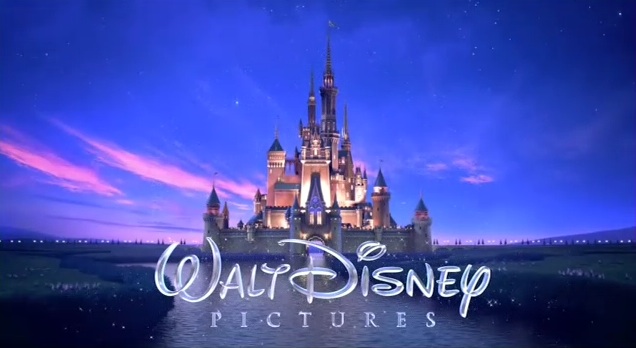
Walt Disney: this has changed quite drastically over the years it has gone from a short animation of their main charachter to a cgi image of the castle in their main theme park.i am not clear on why these have been changed so
drastically.


Universal: a lot of this ident has changed: the colour of the text has change as well as the image, it has gone from a low quality drawing to a high definition image that makes the whole thing appear much more prominent.


Paramount:this ident has gone through roughly the same changes as universal it has gone from a sketch to high def, and the new ident makes you very aware of its 100 year anniversary, one of the clear ways of seeing the age of the ident on the left is the use of Technicolor.

Monday, 17 November 2014

Modern Thrillers


"Brick":The opening of this thriller is in my opinion very effective as it gets the audience to want to continue watching so they learn more about the characters as the sequence itself is dark and has an underlying blue tone suggesting it is cold and sad it also feels quite creepy as we see somebody crouching down and staring at the body of the girl in the stream.we then at the end see what appears to be the girl at school or at least someone withe the same or her armbands, this leads the viewer to several conclusions.


"Zodiac":this thriller opening gives us more to look at than "Brick" it begins very calmly with the 4th of july celebrations and fireworks, but as the two characters meet up we see that more may be happening than independence day celebrations we see that she is a married woman and the boy she is meeting with is not her husband, they then drive off to a deserted road, they then get shocked as a car pulls up to them but the worry is for nothing as the car ends up driving past, there is another point when a car slowly drives past them however and after reruns and parks behind the pair the boy thinks it could be a police officer but as the person walks towards the boy starts talking but we get a shock when the person pulls out a silenced firearm and shoots the boy and the woman.

"No country for old men": the first one and a half minutes of the film are just shots of the desert  and narration it is straight after this at around the 1:36 mark that we see any signs of life we see a sheriff taking a handcuffed man into a police cruiser, a few seconds later the sheriff places a pressurised air canister into the front of the car they then drive off and the narration ends at 2:15 when we see the sheriff and the handcuffed man in the police station. the sheriff is on the phone whilst the man is sitting behind on a bench, the man gets up towards the end of the phone call and then proceeds to strangle the sheriff with his handcuffs all whilst having a crazed almost happy expression on his face. he then takes his canister and the sheriffs cruiser and pulls over another man driving on the empty road, it is then that we learn what the gas tank is as he uses it to blow a hole through the mans head again with the crazed expression on his face, from the short couple of minutes of the opening sequence we can already see so much about this man and it all draws you in making yo want to watch even more.

"A history of violence": the opening of this film is relatively calm, it just appears as though two men have stayed in a motel and the film begins with them coming out and packing up, it starts to get a little odd however when one of the men mentions staying out of the big cities, it is an odd thing for the man to say, whats wrong with the big cities? however as you follow on it gets clearer, the younger man hops into the car whilst the other goes to the motel office to return the key to their room, when he comes out he is holding some fabric and puts it in the bin, at first it seems like an innocent thing to do but the younger man asks him why he took so long and he responds "nothing... i had a little trouble with the maid but, every things fine now" agin this is an innocent statement and for the past 3 minutes seem normal, however the older man asks the younger to get some water saying theres a cooler in the back of the office, the younger man goes on his way to get some water, goes into the office and looks at some postcards and it is then after 4 minutes that we see the problem, the office has the dead bloody bodies of its workers and as the young man struts through we can tell that the older man was behind it, that cloth was probably used to clean blood of his hands and when he claims the the maid was a little trouble we can see that he meant killing her was a "little trouble".

Tuesday, 11 November 2014

The Birds

The Birds 1963 is a thriller from Alfred Hitchcock.

The film uses all of the key parts used in Hitchcock's other thrillers such as a MacGuffin, a hero who must thwart the enemy, suspense, dramatic irony is also used.
All of this make the film such a good thriller.

In this film the external three is from nature not from a psychopath or an organisation, it is from a threat that we do not understand.

the MacGuffin in this film are the lovebirds that Tipi Hedren buys, the audience don't care about these birds but they are what takes the plot forward.
Suspense is used extensively in this film to allow the audience to get into the situation more and when the suspense is broken it affects the audience for example when Hedren goes into the top room and all is silent until the birds sweep down.
Dramatic Irony is used in the school scene when the birds gather behind Hedren we know what is happening but she doesn't this makes the audience want to scream at the screen trying to tell her.

The birds is an open ended text as their is no clear ending the threat of the birds is never explained and is never stopped from the viewers perspective. this also links to the enigma it is a mystery as to why the birds are behaving as such. it could be anything and in the film you always expect for an explanation to appear but it never does, the characters just drive of and you don't even see the birds leave they just sit as if waiting for the opportune moment to strike.

One of the films main aspects that allows it to work so well is its suspense, how that when we can feel that something is going to happen, we are just waiting on the edge of our seats the end of the film has the characters that are left leaving in a car with all of the birds just sitting, the viewer expects the birds to do something up until the actual credits role.

This is the scene where Tipi Hedren is waiting for her friend who works in the school, whilst she is waiting she fails to notice the swarm o birds who are multiplying on the play equipment behind her.
This is another great example of Hitchcocks suspense and has an almost pantomime feel to it as you just want to scream and tell her that the birds are behind her, the suspense builds up and the viewer can hardly contain themselves.

Monday, 10 November 2014

Sound Test


Here is the sound test showing that we know (not really) what to do when it comes to sound in filming.

Thursday, 6 November 2014

Mise-En-Scene

Mise-En-Scene:

This is a french term meaning, "In the scene or frame"

the elements of Mise-En-Scene:

-Settings and Props
-Costume/Hair and make up
-facial expression and body language
-Lighting and Colour
-Positioning of charachters and objects in the frame

Colour:
The first use of colour, in films ,came around in 1904
to begin with, films were hand painted frame by frame, examples of this are George Melies work such as "voyage a travers l'impossible'

After this, films used Technicolor which was used from 1922 to 1952 it is notable for being used in cartoons a lot such as Original Disney cartoons.

In 1977, STAR WARS would become the last film (to date) to be printed in Technicolor.

Colour plays a big role in media as it is used to represent different things, mainly emotions, for example the colour red represents rage and anger but it could also be used to represent lust and romance.

Wednesday, 5 November 2014

Cinematography

This was our first piece filming as a group. Here, we used different camera angles to show what we had learnt in our first lesson on filming.We used several camera angles such as a close up, an extreme close up, a rolling shot, a tracking shot, a low angle, a long shot, a point of view shot etc. As our first piece of filming it wasn't our best. However, we have now experimented and practiced with them a bit, so next time we can hopefully improve and learn. There are camera angles and shots that we have missed out however.


Introducing our group

Here is our group, White Virgin Media:

From left to right: me (Joshua Collier), Michal Cendrowski, Samuel Hannigan and Carly Laslett.
we are the only four from All Saints and so we chose to stick together.